


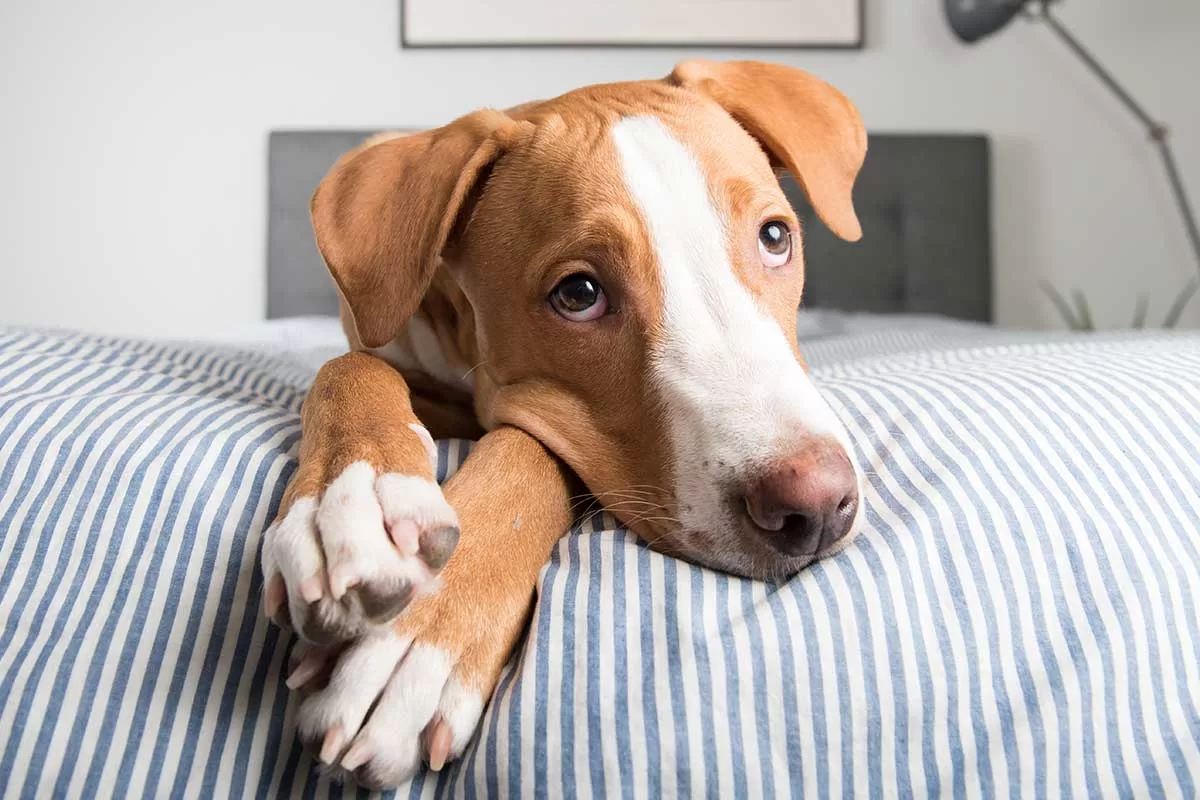
Last updated: [19-Aug-2026] · Medically reviewed by Dr. R. Divya Sharma, DVM (Veterinary Consultant) · Written by [Abhiram Raju], German Shepherd owner
Quick Answer
German Shepherds Pee When Excited or scared because of two related but different mechanisms: excitement urination, an involuntary bladder release triggered by an adrenaline spike in dogs (especially puppies) whose bladder-control muscles aren’t fully developed yet, and submissive urination, an appeasement signal — “I’m not a threat” — usually seen in timid, fearful, or previously scolded dogs. Both are involuntary, not disobedience, and most dogs outgrow excitement urination by 12–15 months. Persistent urination past that age, or any sudden-onset leaking in an adult or senior dog, should be checked by a vet to rule out a UTI, bladder stones, or hormone-related incontinence before you assume it’s behavioral. German Shepherds, as a high-drive, high-arousal working breed, can take slightly longer than average to grow out of the excitement-urination phase.
Table of Contents
If your dog leaks a few drops of urine when you walk in the door, or crouches and pees a little when meeting someone new, you’re not alone — and if you own a German Shepherd, you’ve probably seen it more than once during puppyhood and adolescence.
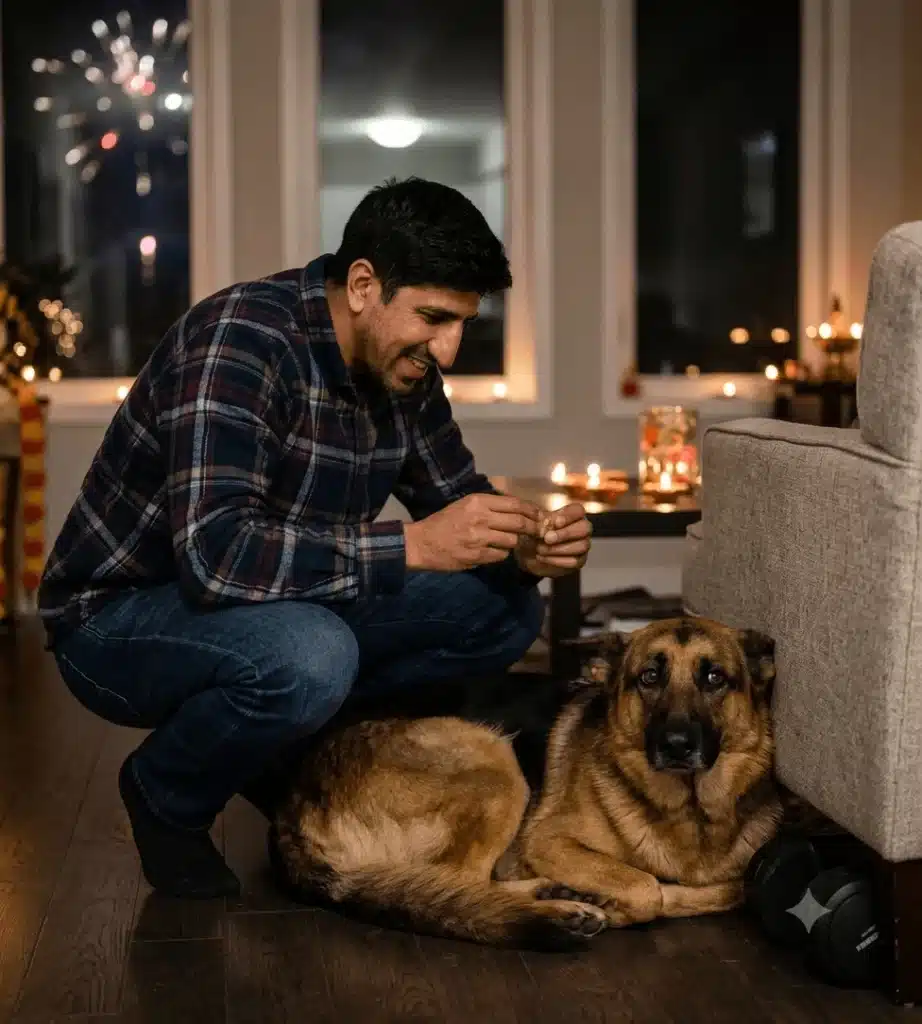
Way back in 2021, I remember my dog rocky got scared for Diwali sounds and the moment when he see me he used to run away, if i got and try to pick him or try to put a leash, he used to pee few drops of urine. I was confused about this scenario but later on i understood it is something called submissive urination, which comes out of fear or anxiety in dogs.
This behavior, often called excitement or submissive urination, is rarely a sign of defiance. It’s a physiological and emotional response — and understanding why it happens, how it differs by age and breed, and when it actually signals a medical issue can help you fix it faster and with less frustration for both of you.
“Submissive or excitement urination is one of the most misunderstood behaviors in young dogs. It’s rarely a sign of defiance — more often it’s a confidence issue. Avoid punishment, reinforce calmness, and rule out any medical conditions early.” — Dr. R. Divya Sharma, DVM (Veterinary Consultant)
What Is Excitement Urination?
Dogs — especially puppies under a year old — often lose bladder control during moments of high arousal: greeting you at the door, meeting guests, or anticipating a walk or mealtime. This isn’t a housetraining failure. It’s physiological.
The bladder sphincter, the ring of muscle that holds urine in, isn’t fully developed in young dogs. When excitement causes a spike in adrenaline, that muscle can momentarily relax, causing a small leak or a full accident — even in a dog that’s otherwise reliably potty-trained.
According to the American Kennel Club (AKC), excitement urination typically fades as a dog matures and develops better impulse control, though it can persist longer in high-energy, high-drive breeds. Veterinary behaviorists at Preventive Vet describe it as an involuntary response tied to “big happy feelings and little bladder control” — the dog isn’t choosing to do it and often doesn’t even notice in the moment.
Common triggers:
- Owner returning home after any absence, even a short one
- Loud voices, clapping, or sudden movement
- New visitors or other pets entering the room
- Anticipating food, a walk, or play
Why German Shepherds specifically
German Shepherds are a working and herding breed known for high drive, sensitivity, and rapid arousal. Because of these traits, some GSDs may take longer to develop the impulse control needed to manage intense excitement, including excitement urination. With consistent training, calm greetings, and maturity, most dogs gradually become better at regulating their emotional responses.
— Dr. R. Divya Sharma, DVM (Veterinary Consultant)
German Shepherds are bred for high working drive and fast emotional arousal — traits that make them excellent working dogs but can also mean a longer runway before a puppy’s nervous system and bladder control fully mature, compared with lower-drive breeds.
What Is Submissive Urination?
Though it looks similar, submissive urination has different emotional roots. It’s a social signal, not an accident — the canine equivalent of saying “I’m no threat, please don’t hurt me.”
This typically shows up in timid dogs, rescues, or dogs with a history of harsh handling or scolding, and is usually accompanied by clear body language:
- Crouching or lowering the body
- Tucked tail
- Avoiding eye contact
- Rolling slightly onto the back, exposing the belly
- Ears pulled back
Behaviorists at PetMD note that submissive urination reflects insecurity or fear, not poor training — and punishing it almost always makes it worse, not better.
Excitement vs. Submissive vs. Medical: Quick Comparison
| Trigger | Body language | Typical dog | Fix approach |
|---|---|---|---|
| Excitement | Loose, wiggly, tail up, may not even notice | Puppies, high-drive breeds like GSDs | Manage arousal, calm greetings |
| Submissive | Crouched, tucked tail, ears back, avoids eye contact | Timid, rescue, or previously scolded dogs | Build confidence, never punish |
| Medical | No clear behavioral trigger; leaking while calm | Any age — especially sudden onset in adults/seniors | Vet visit, urinalysis |
Is This Normal? A Breakdown by Age
Puppy (8 weeks – 6 months)
Excitement urination is near-universal at this stage. Bladder-control muscles are still developing, and puppies haven’t yet learned to regulate the adrenaline spike that comes with excitement. This is the phase where management (calm greetings, frequent potty breaks) matters more than “training it out.”
Rule of thumb for bladder-holding time: starting around 4 months old, a puppy can typically hold their bladder for about one hour per month of age, plus one. A 6-month-old puppy, for example, can usually hold it for roughly 7 hours — though large-breed puppies like German Shepherds may need more frequent breaks than this formula suggests during high-excitement periods (visitors, play sessions) even if they can technically hold it longer when calm.
Adolescent (6 – 18 months)
This is when excitement urination should start declining as impulse control develops. GSD owners often notice a temporary regression during the classic “teenage” phase (roughly 6–14 months), when adolescent dogs can seem to backslide on previously solid house manners, including this one. That’s a well-documented breed-forum pattern, not a sign that training has failed — consistency through this window matters more than intensity.
Adult (18 months+)
By 18 months, most dogs — including GSDs — should have grown out of routine excitement urination. If it’s still happening regularly at this age, it usually points to one of:
- Inconsistent handling of greetings (different family members reacting differently)
- Underlying anxiety or a submissive temperament that hasn’t been actively worked on
- A medical cause that hasn’t been ruled out yet
Persistent adult excitement urination is a training gap, not “just a phase” you wait out.
Senior
New-onset urination in a previously reliable adult or senior dog is a medical red flag, not behavior. Age-related conditions — kidney disease, hormone-responsive incontinence, cognitive decline, or orthopedic pain that makes normal posturing to urinate uncomfortable — become far more likely explanations than excitement or submission at this life stage.
When It’s a Medical Problem, Not Behavior
Before labeling any of this as purely behavioral, it’s worth ruling out medical causes — particularly if the urination pattern doesn’t fit the excitement/submission profile above.
Veterinarians point to several conditions that can mimic or worsen excitement urination, including:
- Urinary tract infections (UTIs) — irritation can cause urgency and leaking unrelated to emotion
- Bladder stones
- Urinary incontinence — a physical inability to fully control the bladder, distinct from a behavioral response
- Hormone-responsive incontinence — most common in spayed females, caused by lowered estrogen affecting bladder sphincter tone
- Kidney disease — often paired with increased thirst and more frequent urination
- Ectopic ureters — a congenital condition (relevant for GSD puppy buyers to ask breeders about) where a ureter bypasses the bladder
- Orthopedic or joint pain — a dog that can’t comfortably posture to urinate normally may leak instead
- Cognitive decline in seniors
See a vet if you notice:
- Frequent urination or visible straining
- Blood in the urine
- Dribbling even while calm, with no obvious trigger
- Excessive thirst
- Sudden onset in an adult or senior dog who was previously reliable
“A quick urinalysis is the only reliable way to distinguish behavioral urination from a medical cause. Don’t guess — especially if the leaking starts suddenly in a dog that’s never had this issue before.” — Dr. R. Divya Sharma, DVM
Training Steps to Stop Excitement or Submissive Urination
The goal is to build your dog’s confidence and self-control while keeping greetings calm and predictable. None of these require punishment — in fact, punishment reliably makes both excitement and submissive urination worse.
1. Keep greetings low-key
When you arrive home, ignore your dog for two to three minutes until they settle. Skip the high-pitched voice and excited petting. Once they’re calm, reward quietly with praise or a treat.
In my experience, it took a few weeks of consistently keeping greetings calm and avoiding too much excitement before the accidents started to become less frequent. The biggest improvement came when we stopped making a big fuss during greetings and gave my dog time to settle down before giving attention.
Abhiram – Dog Owner and Writer of this blog
2. Reinforce calm behavior
Mark calm postures with a consistent cue (“good calm”) and a small treat. Over time, your dog learns that calm behavior — not excitement — is what earns attention.
3. Train “go potty” on cue
Take your dog out regularly and pair a consistent cue (“go potty”) with urination. Predictable timing strengthens bladder control and reduces surprise accidents indoors.
4. Desensitize greetings gradually
Have visitors enter quietly, avoid direct eye contact with the dog, and toss treats from a distance rather than reaching down to pet immediately. This reshapes the emotional association from fear/excitement to calm anticipation.
5. Never punish or scold
Punishment increases anxiety and reliably worsens submissive urination specifically, since the behavior is already an appeasement response to a perceived threat. Clean up calmly and redirect instead.
As the AKC and multiple veterinary behaviorists consistently recommend, patience and positive reinforcement — not correction — are the fastest route to resolving this.
Confidence-Building Activities {#confidence-building}
Dogs who urinate from fear or submission generally respond well to structured confidence work:
- Basic obedience — “sit,” “stay,” “come,” and “down” build control and trust
- Puzzle feeders — keep the mind occupied and build self-assurance
- Controlled new-environment exposure — new places and people, introduced calmly
- Clicker training — reinforces good behavior without any element of intimidation
For German Shepherds specifically, job-based confidence work — scent games, structured obedience, tasks that use their working drive — tends to build confidence faster than generic play, since it engages the traits the breed was developed for.
Even 10 minutes of daily mental enrichment can measurably reduce anxiety-driven urination.
What NOT to Do {#what-not-to-do}
- ❌ Yelling or scolding — increases fear and worsens submissive urination specifically
- ❌ Direct eye contact during greetings — can read as a dominance challenge to an already-anxious dog
- ❌ Overcleaning with ammonia-based products — the scent can resemble urine and encourage re-marking
- ❌ Forcing confrontation with triggers — progress needs to be gradual and positive, not rushed
How Long Until It Stops? {#how-long}
Most puppies outgrow excitement urination by 12–15 months, as bladder muscles mature and confidence grows. Large-breed dogs like German Shepherds sometimes track toward the later end of that range — always confirm timelines with your vet rather than assuming.
For submissive urination, recovery timelines depend more on the individual dog’s history and temperament. Rescue dogs or dogs with a history of harsh handling may need longer, gentler rehabilitation, and that’s normal — it isn’t a sign that training isn’t working.
FAQ
Is it normal for a dog to pee when excited? Yes, especially in puppies and young dogs. It’s an involuntary response to an adrenaline spike, not a housetraining failure, and most dogs outgrow it by 12–15 months.
Why does my dog pee a little when scared but not when happy? That’s typically submissive urination rather than excitement urination — an appeasement signal tied to feeling threatened, rather than overstimulation from joy.
Do dogs grow out of submissive urination? Many do, especially with consistent, gentle confidence-building and zero punishment. Dogs with a history of fear or harsh handling may take longer and can benefit from a trainer or behaviorist.
Can spaying or neutering affect this? Yes — hormone-responsive incontinence, most common in spayed females, is a medical cause of leaking that can resemble or accompany behavioral urination. It’s worth mentioning to your vet if the timing lines up with a spay procedure.
Should I take my dog to the vet for excitement peeing? If it’s a young puppy with classic triggers and no other symptoms, it’s usually safe to start with behavioral management. See a vet if the dog is over 18 months and still leaking regularly, if onset is sudden in an adult, or if you notice blood, straining, or excessive thirst.
Is excitement urination more common in German Shepherds? It’s not more common in the sense of a medical predisposition, but the breed’s high drive and fast arousal can mean the phase lasts a bit longer than in lower-energy breeds.
What’s the difference between marking and excitement urination? Marking is a small, deliberate deposit of urine (often on vertical surfaces) tied to territory, typically in intact males. Excitement and submissive urination are involuntary, occur during specific emotional triggers, and aren’t about territory at all.
Key Takeaway
When dogs urinate from excitement or fear, it’s not disobedience — it’s communication. Your patience, tone, and body language directly shape how quickly your dog learns to manage both their emotions and their bladder control.
By staying calm, reinforcing confidence, and ruling out medical causes early, you can eliminate the accidents and build a stronger, more trusting relationship along the way.
“Submissive or excitement urination is one of the most misunderstood behaviors in young dogs. It’s rarely a sign of defiance — more often it’s a confidence issue. Avoid punishment, reinforce calmness, and rule out any medical conditions early.” — Dr. R. Divya Sharma, DVM (Veterinary Consultant)
About the author and reviewer
Abhiram — pet parent and writer. Blogger and a Pet parent who is petting dogs from past 20 years.
Health-related articles are reviewed by Dr. R. Divya Sharma, DVM (Veterinary Consultant). Behavior-related content is reviewed by Abhinav Rao (Dog Trainer since 2011).
References
- American Kennel Club — Why Dogs Pee When Excited
- PetMD — Why Dogs Pee When Excited or Scared
- WebMD Pets — Submissive Urination
- Zoetis Petcare — My Dog Pees When Excited, Help!
- Chewy — My Dog Pees When Excited, Is This Normal?
- Preventive Vet — Help! My Puppy Pees When Excited
- Humane Colorado — Fearful and Excitement Urination in Dogs
- The Spruce Pets — Submissive Urination and Training Tips
- Best Friends Animal Society — Understanding Dog Body Language
