


Last updated June 2026 · Reviewed by Dr. R. Divya Sharma, DVM
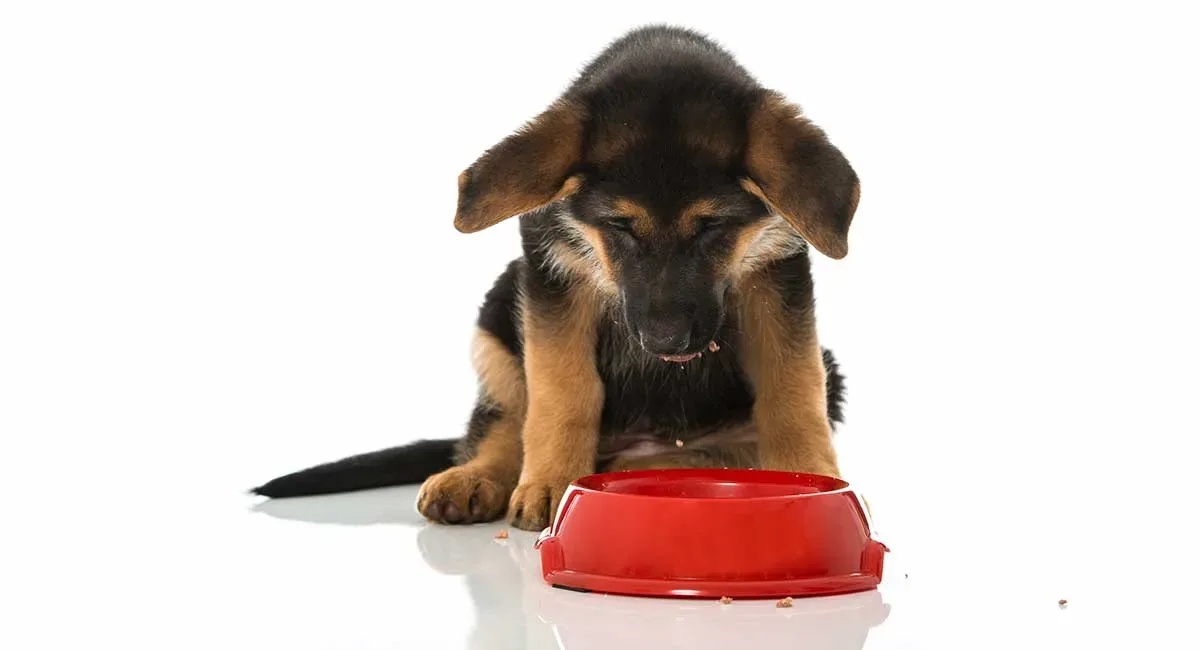
When I brought my German Shepherd puppy home, he was exactly 30 days old. I poured out Royal Canin Maxi Starter into his bowl, sat back, and waited. He sniffed it once, looked at me, and walked away.
No interest. No bite. Nothing.
I searched Google for an hour that night and found a dozen articles repeating the same generic line: “feed as per the packaging instructions.” None of them explained why a puppy that young wouldn’t even try the food.
So I called the breeder I’d gotten him from. What he told me in under a minute solved the entire problem — and it’s the reason I’m writing this guide.
“Bro, he’s a 30-day dog. How is he supposed to eat that even if you pour water on it? Mash it with a masher and give it to him again.”
I did exactly that. He finished the bowl in minutes. That one phone call is the missing piece in almost every feeding guide online, and it’s what this article is built around.
Table of Contents
Why Your Puppy Isn’t Eating Royal Canin Maxi Starter
If you’re reading this at 11 PM because your puppy is staring blankly at a full bowl, here’s what’s actually happening — not a guess, but the physical reason.
A puppy under 30–35 days old has a bite force of roughly 5–10 PSI. That’s not enough pressure to crack a dry kibble, let alone chew and swallow it. Up until now, your puppy has only known mother’s milk — a liquid. Dry, hard kibble is a completely foreign texture, shape, and smell. It’s not that your puppy is being fussy. It’s that he physically cannot process what’s in front of him yet.
Soaking the kibble in water softens it, but for very young pups, even soaked kibble can still be too firm and the bits too large. That’s where mashing comes in — turning the kibble into a smooth, porridge-like paste that mimics the texture they’re used to. This single adjustment is what most generic feeding guides skip entirely, and it’s usually the actual reason a puppy refuses to eat.
What Is Royal Canin Maxi Starter, Exactly?
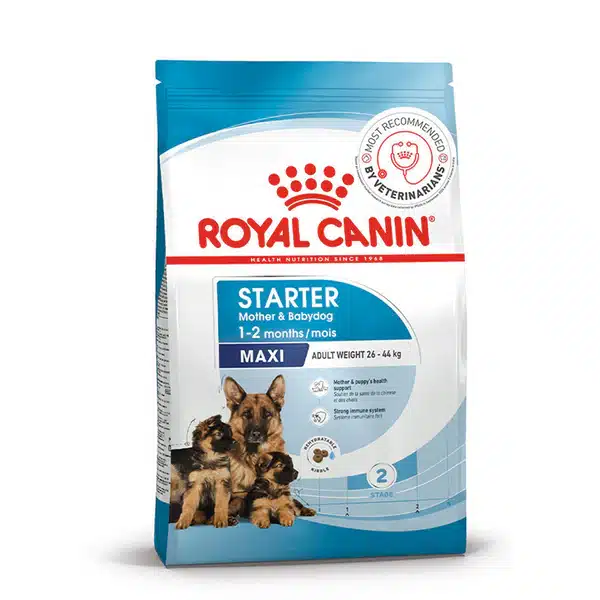
Royal Canin Maxi Starter (full name: Maxi Starter Mother & Babydog) is a complete feed designed for two groups: large-breed mother dogs (26–44 kg adult weight) during the end of gestation and through lactation, and their puppies as they wean off milk, up to 2 months old.
The kibble is engineered specifically to rehydrate into a soft, porridge-like consistency when mixed with warm water — that’s the feature most owners never realize they’re supposed to use. It’s not meant to be fed dry to a young puppy at all.
How to Feed Royal Canin Maxi Starter to a Puppy (Step-by-Step)
Here is the exact method that worked for my puppy, combined with Royal Canin’s own preparation guidance.
Step 1: Measure the Right Quantity
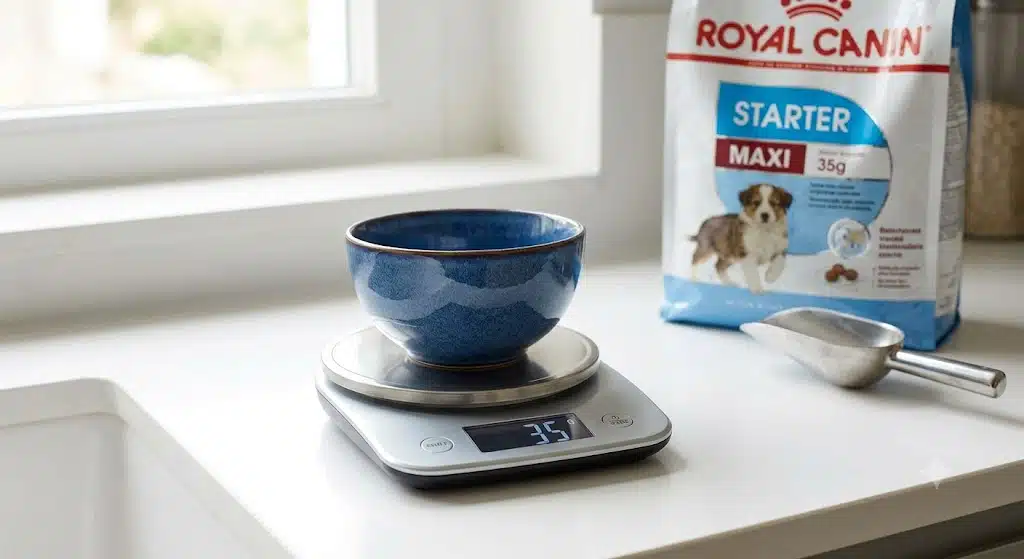
Use a small bowl and measure kibble based on your puppy’s age and weight, not a flat “cup” estimate. As a general starting point for large-breed puppies:
- 30–35 days old: 30–40g per meal
- 36–45 days old: 40–60g per meal
- 46–60 days old: 60–90g per meal
These are starting ranges — every puppy’s appetite and growth rate differs, so adjust based on how much your puppy actually finishes, and check with your vet if you’re unsure.
Step 2: Soak the Kibble in Warm Water — Use the Right Ratio
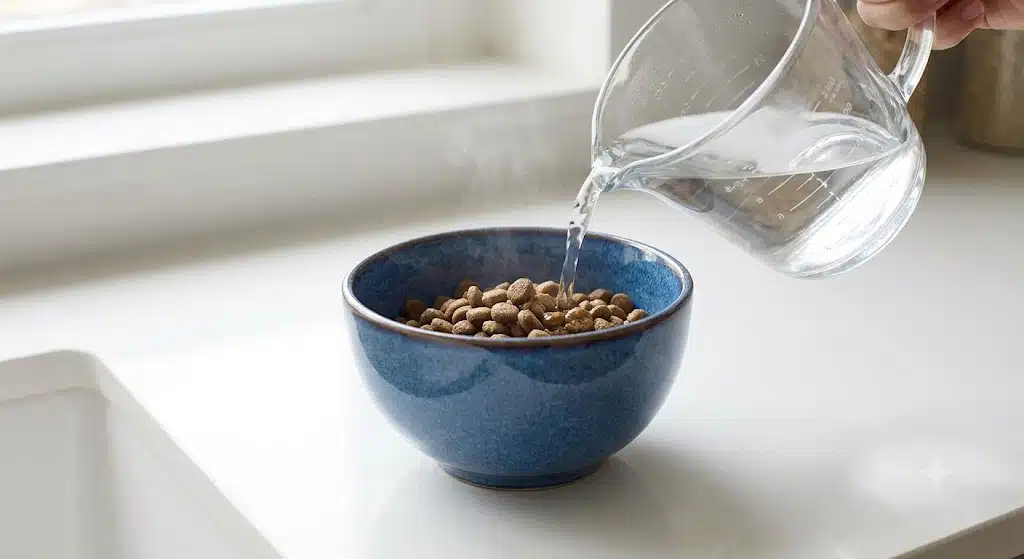
Royal Canin’s own preparation guidance recommends roughly two parts warm water to one part kibble. Use lukewarm water, not hot and not cold — water that’s too hot can damage some nutrients, and cold water won’t soften the kibble properly.
Let it sit for 10 to 20 minutes. Younger puppies (under 40 days) benefit from the longer soak time.
Step 3: Mash It to a Paste for Puppies Under 40 Days
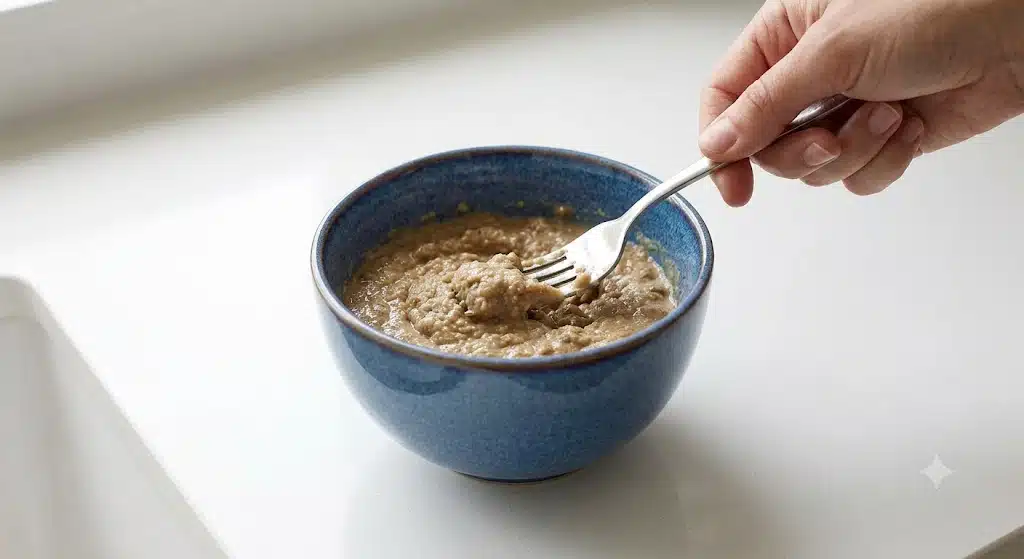
This is the step that fixed everything for me, and it’s the one I want you to actually pay attention to.
Once the kibble has soaked and softened, use a fork or a small potato masher to break it down further into a smooth, lump-free paste — not just soft kibble, but a paste. If it’s still too thick, add a small splash of warm water and mix again. The texture you’re aiming for is closer to a thick porridge than soaked cereal.
If your puppy is over 45–50 days old, you can usually skip the mashing and just feed the soaked kibble as-is. But under 40 days, mashing makes the difference between a puppy that eats and one that walks away.
Step 4: Place the Bowl Down and Step Back
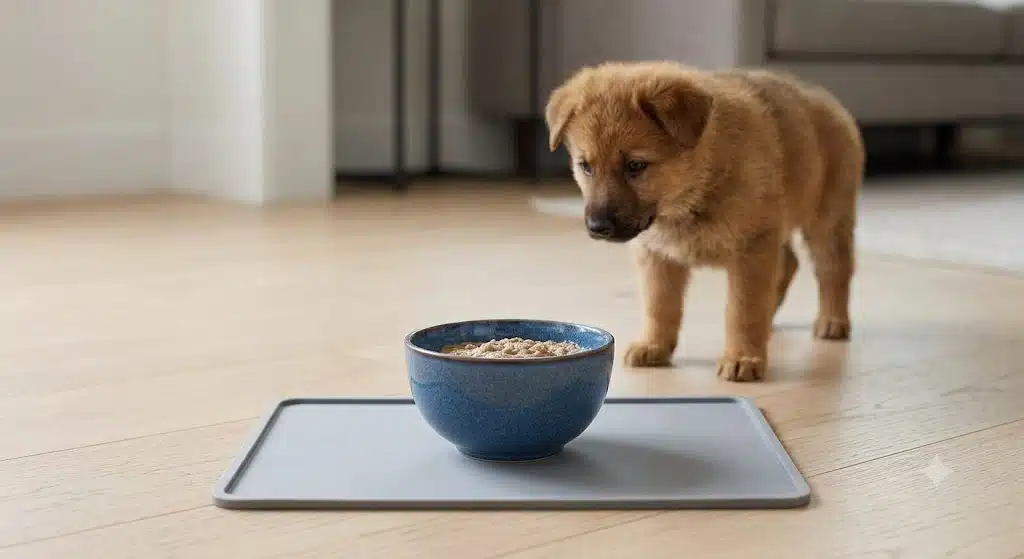
Put the bowl in front of your puppy and give him space. Puppies, especially in their first weeks in a new home, can be cautious around new food, new smells, and a watching human. Don’t force-feed or hover too closely — let him approach on his own terms.
Step 5: Adjust Texture as Your Puppy Grows
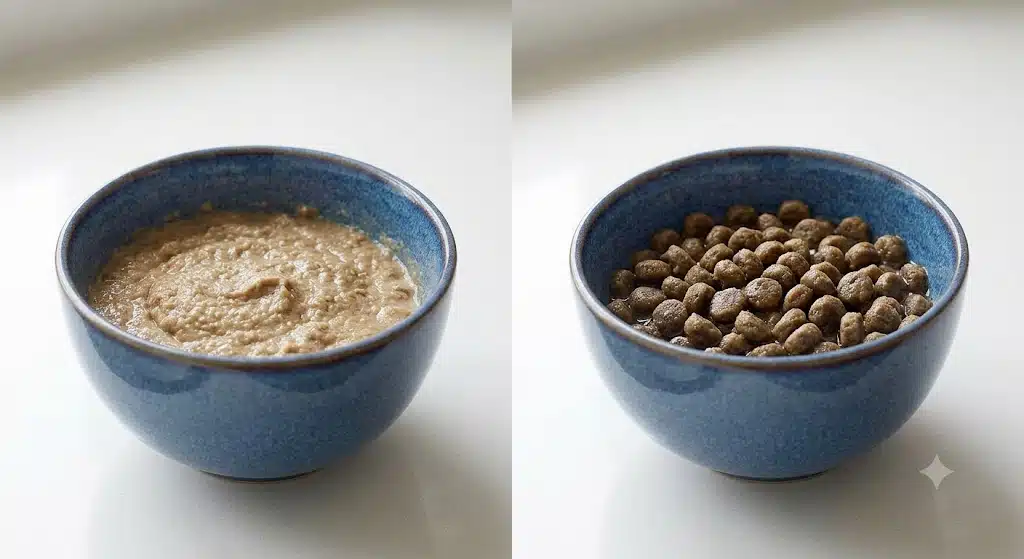
| Age | Texture |
|---|---|
| 25–35 days | Full mash / paste |
| 36–45 days | Soft mash, slightly thicker |
| 46–60 days | Soaked kibble, no mashing needed |
| 60+ days | Lightly soaked, gradually reducing water |
Step 6: Feed 3–4 Times a Day on a Schedule
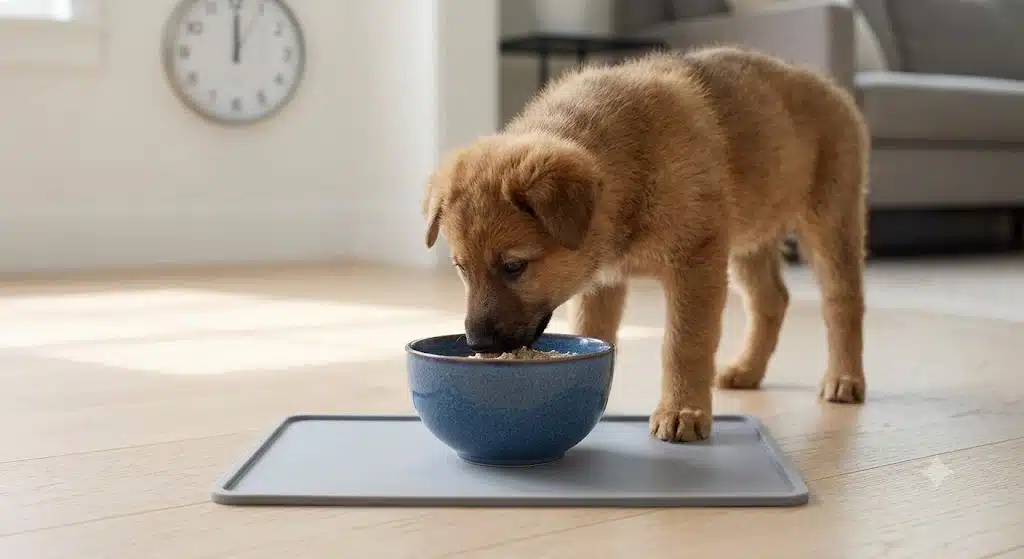
Young puppies have small stomachs and high energy needs, so smaller, frequent meals work better than two large ones. A schedule that worked well for us:
- 7:00 AM — Royal Canin Maxi Starter (mashed/soaked)
- 12:00 PM — Royal Canin Maxi Starter (mashed/soaked)
- 4:00 PM — Lactose-free puppy milk supplement
- 7:30 PM — Royal Canin Maxi Starter (mashed/soaked)
Keep timing consistent — it helps with digestion and also makes house-training noticeably easier.
Step 7: Keep Fresh Water Available Separately
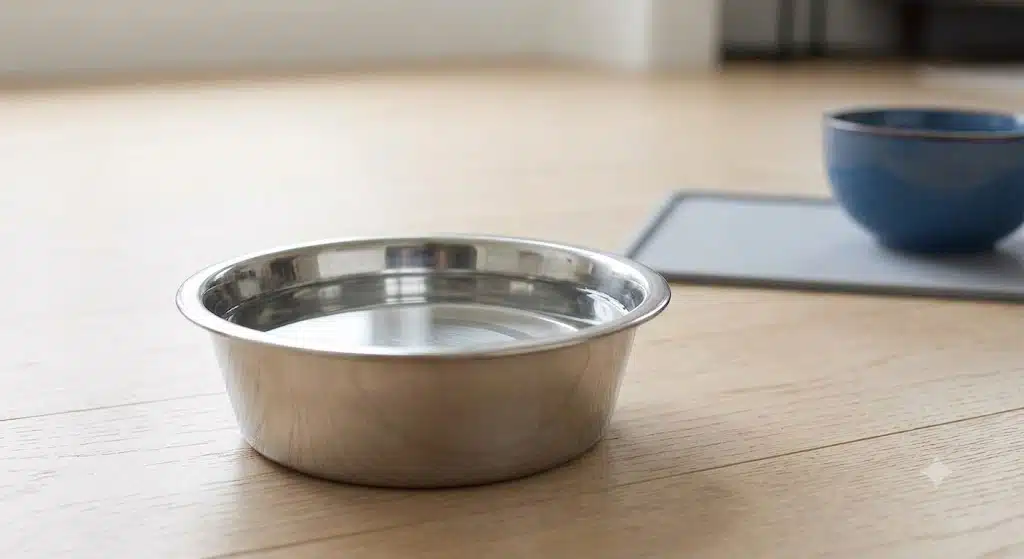
Even though the kibble itself is soaked, your puppy still needs access to clean drinking water throughout the day, separate from feeding times.
Royal Canin Maxi Starter Feeding Chart by Age
| Age | Texture | Daily Meals | Water Ratio |
|---|---|---|---|
| 25–35 days | Full paste/mash | 4x | 2 parts water : 1 part kibble |
| 36–45 days | Soft mash | 4x | 2 parts water : 1 part kibble |
| 46–60 days | Soaked, no mashing | 3–4x | 1.5 parts water : 1 part kibble |
| 60+ days | Lightly soaked | 3x | 1 part water : 1 part kibble |
This is a general guide based on personal experience and Royal Canin’s own preparation instructions — always weigh your puppy regularly and adjust portions with your vet’s input, since individual breeds and growth rates vary.
Common Feeding Problems and Real Fixes
- My puppy sniffs the food and walks away. The texture is likely still too firm. Mash it further into a smoother paste, and make sure the water is lukewarm, not cold.
- He ate fine yesterday but refuses today. Check the water temperature first — puppies are sensitive to it being too cold. Also check that the bowl and food are fresh; leftover soaked kibble left out too long can turn unappealing fast.
- My puppy vomited shortly after eating. This often means the portion was too large for one sitting. Reduce the amount per meal and increase the frequency slightly instead. If vomiting continues, contact your vet.
- How long should I soak the kibble? 10 minutes minimum. For puppies under 40 days, 15–20 minutes gives a softer result.
- Can I add anything to make it more appealing? A few drops of salmon oil or a small amount of warm, unsalted chicken broth can help once your puppy is used to the basic mash. Avoid adding salt, sugar, or seasoning of any kind.
How Long Should You Feed Royal Canin Maxi Starter?
Royal Canin recommends Maxi Starter up to 2 months (around 60 days) of age, after which puppies should transition to a large-breed puppy formula like Royal Canin Maxi Puppy or another vet-approved option.
Don’t switch foods abruptly — a sudden change can upset a young puppy’s digestive system. A gradual transition over 7–10 days works well:
- Days 1–2: 75% Maxi Starter, 25% new food
- Days 3–5: 50% Maxi Starter, 50% new food
- Days 6–8: 25% Maxi Starter, 75% new food
- Day 9 onward: 100% new food
Is Royal Canin Maxi Starter Good for German Shepherd Puppies?
Yes — German Shepherds typically fall within the 26–44 kg adult weight range that Maxi Starter is formulated for, which makes it a reasonable fit for the breed during the weaning period. GSD puppies grow fast in their first two months, so getting the texture and feeding routine right early on matters more than people expect — a puppy that struggles to eat in week one can fall behind on weight gain that takes weeks to catch back up.
When to Call Your Vet
Most feeding hiccups in the first few weeks are normal and resolve once you get the texture right. But reach out to your vet if you notice:
- Your puppy hasn’t eaten anything in over 24 hours
- Bloody stool, or vomiting more than once
- Noticeable weight loss over a week
- Lethargy, weakness, or unusual withdrawal
These can be signs of something beyond a fussy eater, and it’s always better to check early.
Frequently Asked Questions
How much water do I add to Royal Canin Maxi Starter?
Use roughly two parts warm water to one part kibble, and let it soak for 10–20 minutes before serving. For puppies under 40 days, mash it further into a paste after soaking.
Can I give Royal Canin Maxi Starter to a 30-day-old puppy?
Yes, Maxi Starter is designed for weaning puppies up to 2 months old. For a 30-day-old, soak the kibble and then mash it into a paste, since the puppy’s bite force isn’t strong enough to chew it as-is.
My puppy isn’t eating Royal Canin Maxi Starter — what should I do?
Soak the kibble in warm water for at least 10 minutes, then mash it into a smooth paste if your puppy is under 40 days old. This single change resolves the issue for most very young puppies.
How many times a day should I feed Royal Canin Maxi Starter?
3 to 4 times a day, spaced evenly, works best for young puppies due to their small stomach size and high energy needs.
Until what age should I feed Royal Canin Maxi Starter?
Up to around 2 months (60 days) of age, after which you should gradually transition to a large-breed puppy formula.
Can I mix milk with Royal Canin Maxi Starter?
It’s better to offer a lactose-free puppy milk supplement as a separate meal rather than mixing it directly into the kibble, since regular dairy milk can upset a puppy’s digestion.
Is Royal Canin Maxi Starter good for German Shepherds specifically?
Yes, German Shepherds generally fall within the large-breed weight range (26–44 kg adult weight) that Maxi Starter is formulated for, making it a suitable choice during the weaning period.
This guide is based on personal, hands-on experience raising a German Shepherd puppy, combined with Royal Canin’s official feeding guidance. It is not a substitute for veterinary advice — always consult your vet for recommendations specific to your puppy’s health and growth.
